
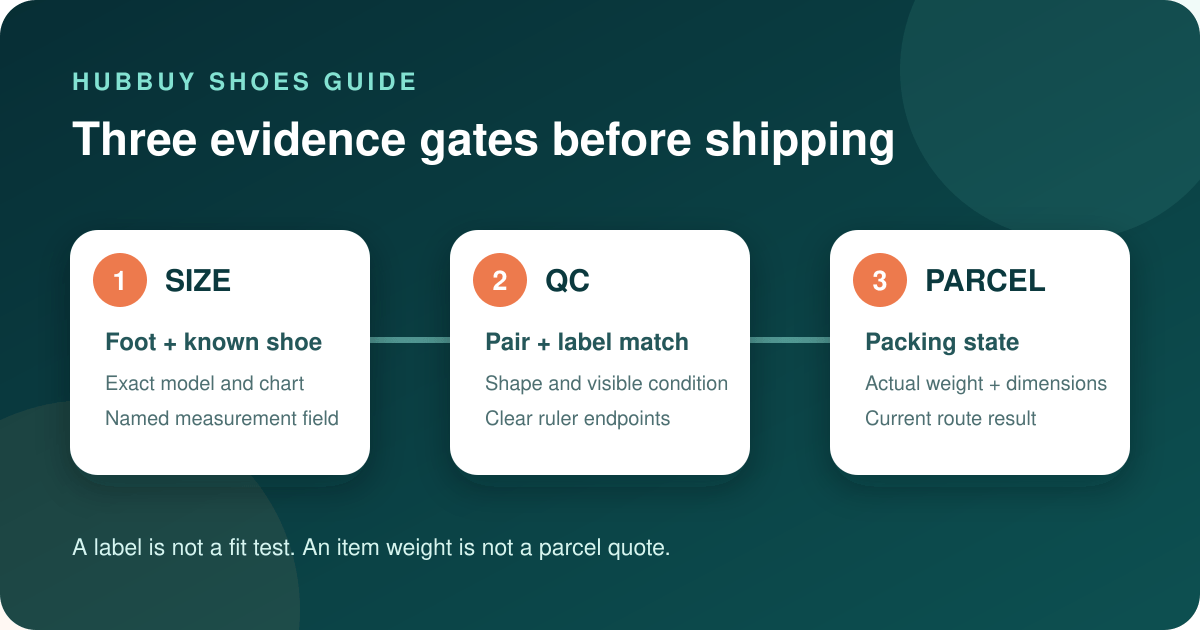
Use the Hubbuy shoes spreadsheet to discover links, then check the exact model, selected size and current listing before ordering. Searches for Nike or Golden Goose are starting points for finding records, not proof of stock, brand authorisation or authenticity. A useful shoe comparison follows three separate checks: identify the intended pair, compare fit evidence and inspect the pair that actually reaches the warehouse. This guide connects those checks with a practical packaging decision.
Find a shoe link that matches your reference
Open the shoes category or search a recognisable model name. If you have the original product ID, use it to locate a specific record. If all you have is an outfit screenshot, crop the shoe and try image search. Compare several results for the sole shape, panel layout, fastening and colour placement. A matching brand term in a title is only one clue.
Open each promising product page and save its original source ID. The internal catalogue number can be different. Follow the Hubbuy product button and confirm that the destination still describes the intended item. A saved catalogue image may outlive a seller’s old option list, so check the live variant before treating the link as ready to buy.
Use Nike and other brand queries carefully
A search such as Nike plus a model name is more specific than searching a brand alone. Add a colour only when necessary, and remove extra words if no records appear. Apply the same method to Golden Goose or another label mentioned in a reference. Results depend on the connected catalogue and can change; this guide does not promise that a particular brand or model is available.
Neither the search result nor a familiar logo verifies an authorised seller or an authentic product. If authenticity is essential, obtain evidence from a reliable source appropriate to that purchase. Warehouse photographs can show visible features of a received pair, but they are not a substitute for provenance, material testing or a specialist authentication process.
Create a fit reference before choosing a size
Measure both feet using a consistent method and note the larger relevant measurement. Keep a record from a pair that already fits comfortably, including the model, labelled size and any measurement you can compare meaningfully. Think about intended socks and use. A shoe that feels suitable for short casual wear may not meet the same needs as one intended for long walks.
Read the exact seller chart and identify what each number measures. Foot length, removable insole length and outsole length are different fields. A familiar EU, US, UK or CN label does not establish identical fit across models. If the chart is unclear, resolve that uncertainty before selecting the size rather than converting labels from an unrelated chart.
Compare the exact option and included parts
Record the model, colour, selected size, quantity and any included accessories. Check whether the listing distinguishes versions or materials under similar pictures. If the option text conflicts with the image, ask for clarification. Save the selected option and the current chart together so that you can later compare the received pair with the order you actually placed.
Look beyond the headline price. Two entries may differ in quantity, box inclusion, extra laces or another detail that matters to you. Treat catalogue prices as discovery references and confirm the current amount and currency at the destination. Product cost and final international shipping are separate decisions; neither the shoe photograph nor the title establishes the delivered total.
Review warehouse QC in a repeatable order
When the purchased pair reaches the warehouse, begin with identity: both shoes, correct colour and visible size labels. Then compare left and right shoes for obvious differences in shape, sole alignment and panel placement. Look at the toe, heel, sides and outsole where those views are available. Record what is visible, what appears inconsistent and what remains hidden.
Do not confuse a source gallery with QC for your own order. Even a gallery containing inspection-style pictures may relate to a different item or purchase. Use the photographs associated with your order and keep their context. Lighting and angle can affect perceived colour and proportions, so ask for a clearer view when the current one cannot resolve a specific concern.
Request measurements that answer a real question
A useful request names the exact field and how it should be shown. For an insole measurement, ask for the relevant item to be visible with both ruler endpoints clear, where that service is available. Compare it only with a reference measured the same way. A ruler laid outside the shoe cannot automatically tell you the internal space available to your foot.
Use requests selectively. A clear label may resolve a size-selection mistake, while another overall photograph may add little. Check current service availability and any charge in the order interface before requesting extra work. Photographs can support a decision, but they cannot reproduce comfort, flexibility during wear or how a particular last fits your foot.
Keep problems linked to the order record
If the received size, colour or included parts differ from your saved option, document the mismatch plainly. Pair the relevant order details with the clearest image and describe the difference. Check the live handling and return options promptly rather than assuming that every item has the same deadline or remedy. Keep any response with the order so that the next decision uses current information.
If the uncertainty is about fit rather than an obvious mismatch, distinguish those issues. A correctly labelled pair can still have unsuitable measurements for you. Decide what evidence would change your choice before asking for another photo. This makes the request useful and avoids treating the number of available images as a measure of how well the pair has been checked.
Choose the box and protection for a reason
Keep the shoe box when its condition, storage use or protection matters enough to justify the space it occupies. If considering removal, check whether the current packing service permits it and how the shoes would then be protected. Removing packaging can change both dimensions and protection, so the decision should reflect the pair’s shape and vulnerability as well as the available shipping options.
Do not assume that removing a box always lowers the final charge. Compare the current permitted packing scenarios using measured packed weight, dimensions and a matching shipping quote when available. A route may apply its own size, weight or goods restrictions. An earlier estimate based only on product weight is not a confirmed price for the completed parcel.
Work through a two-candidate comparison
Imagine two search results that resemble the same grey trainer. Candidate A has a matching sole pattern but an unclear size chart. Candidate B has a clear chart but a different heel shape. Record those differences before choosing. If the heel shape is essential, candidate B is not an equivalent alternative merely because it is cheaper. Candidate A still needs its sizing uncertainty resolved.
After choosing a traceable listing and size, save the option and request useful QC when the order arrives. If the pair matches and the measurements are acceptable, compare suitable packing choices. If it does not match, resolve the order issue before planning international shipment. Keeping these decisions in sequence prevents a convenient shipping plan from pressuring you to accept the wrong pair.
Save the checks you will need next time
Retain the original ID, selected variant, date checked, size-chart reference and useful QC measurements. After delivery, add a short note about actual fit and comfort, clearly separated from what the photographs showed. That personal record can help with a later purchase, although a new model or changed listing still needs a fresh comparison.
Use the shoes category to explore, product search to trace a known ID and the QC guide to plan a focused inspection. A good spreadsheet entry reduces the time spent finding the right link. The purchase decision still depends on the current option, evidence relevant to your size and the condition of the pair received for your order.
Make a shoe shortlist you can actually compare
For a Nike, Golden Goose or other model search, compare candidates in five fields: original product ID, selected option, relevant size measurement, current product price and unanswered QC question. Leave unknown fields visibly blank instead of replacing them with assumptions. The same brand word does not make two listings equivalent, and no product in this guide is labelled as personally tested.
Before adding a pair to an existing clothing parcel, estimate the permitted boxed and unboxed alternatives with the same destination. Keep the box if its protection or value matters; remove it only when the current service allows that choice and you accept the replacement protection. Compare the resulting complete package, not a guessed saving per shoe. The new calculator tutorial explains the weight and dimension inputs, while the parcel checklist helps prevent a wrong-size pair from being selected for shipment.