
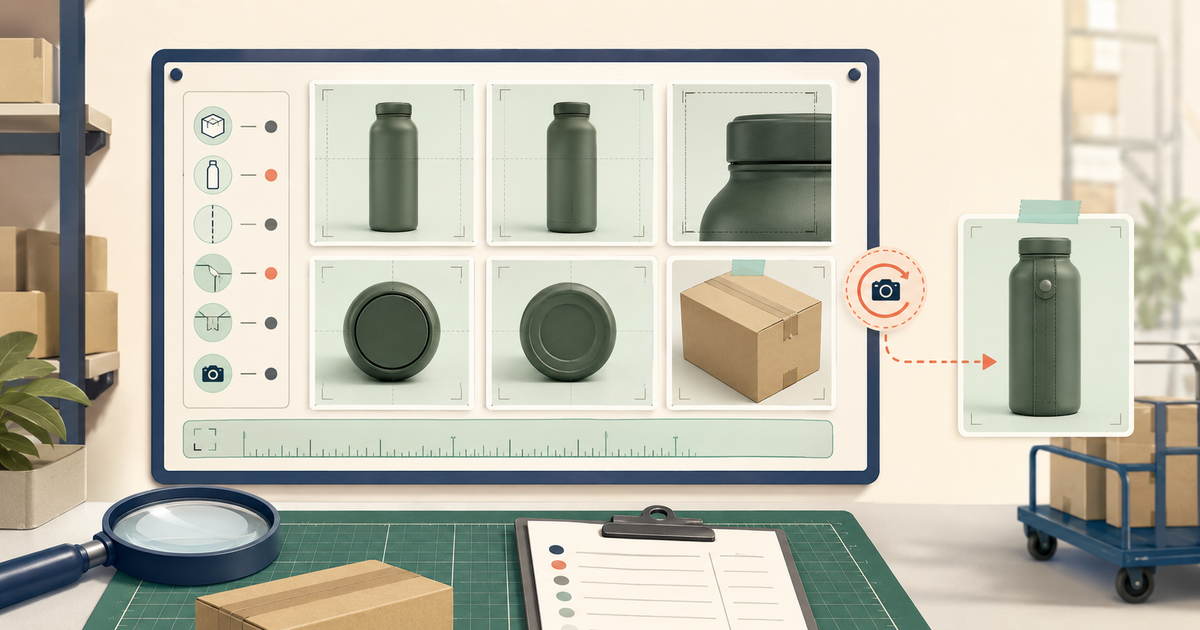
Buying clothes through Hubbuy requires comparing listing measurements with a reference that makes sense for you. Labels such as M, G, or XL do not create universal equivalence between sellers, designs, or markets. For T-shirts, hoodies, and trousers, a record in centimetres is usually more useful than automatically converting a Brazilian size to a Chinese one. This guide shows how to build that comparison and connect it to the purchased variant and the photos received from the warehouse.
Choose a reference garment with a known fit
Choose a garment you own that has the desired fit and resembles the product you intend to buy. A fitted T-shirt is not the best reference for a loose hoodie. Consider fabric, stretch, cut, and intended use. The reference should represent the result you want, including room for a layer underneath when that is part of how you plan to wear it.
Record the garment type, unit of measurement, and how it was positioned. Use a flat surface without stretching the fabric, and repeat the procedure for the important measurements. Keep a photo showing both ends of the measuring tape. The goal is not impossible precision, but to avoid comparing numbers produced by entirely different methods.
Identify what the seller's chart is measuring
A chart may describe recommended body measurements, the finished garment, its flat width, or its full circumference. Read headings, units, and diagrams before choosing a column. If the listing says only “chest,” confirm whether the number means armpit-to-armpit width or circumference. The same word may be used differently in different listings.
HubbuyCN maintains an older size-comparison page with reference charts and notes about variation between designs. It does not replace the seller's chart for the chosen garment. There is no reason to convert every letter size automatically using one rule. Save the listing's specific chart and clarify the measurement basis when the description is insufficient.
Compare T-shirts by width, length, and shoulders
For a T-shirt, record at least the armpit-to-armpit width and length using the points specified in the chart. Shoulder and sleeve measurements help explain how it will fit, especially for loose cuts. A T-shirt may have a suitable width but a length very different from your reference. Choosing solely by chest measurement therefore leaves part of the decision unexamined.
When the chart uses circumference and your measurement is a flat width, the comparison may require multiplying the width by two, provided both describe the same area of the garment. Fictional example: a flat width of 54 cm corresponds to approximately 108 cm in circumference at that point. This does not turn the result into a body measurement or determine the correct size for you on its own.
Consider layers and construction when choosing hoodies
A hoodie may have dropped shoulders, raglan sleeves, tight cuffs, an elastic hem, or a heavy hood. These features affect fit and how the numbers should be interpreted. With a dropped shoulder, a larger measurement between seams does not necessarily mean the garment was chosen incorrectly. Compare the design's construction and use the reference garment closest to the desired effect.
Record width, length, sleeve length, and how the seller measures each section. If you intend to wear another garment underneath, test that combination with your reference piece. Do not add a fixed amount of ease for every fabric. The right amount depends on cut, stretch, and use. Questions about composition and shrinkage should be treated as unresolved information, not as characteristics assumed from a photograph.
Read waist, hip, rise, and length measurements together
When choosing trousers, check whether the waist is listed relaxed, stretched, flat, or as a circumference. Elastic and a drawstring do not make every size equivalent. The hips, thighs, and rise can also limit the fit. An acceptable waist does not make up for a tight cut elsewhere or a rise different from how you intend to wear the trousers.
Separate total length from inseam. The outside measurement includes the upper section of the trousers, while the inseam starts at the point where the legs meet. Comparing one with the other leads to an incorrect conclusion about length. If the chart does not identify the starting point, ask for a diagram or explanation. Also record the hem opening when it changes how the trousers sit over footwear.
Use a simple worksheet to compare two options
Create three columns: your reference garment, listing option A, and listing option B. Keep each row dedicated to the same measurement and unit. Alongside it, note the difference and expected effect, such as greater length or more room around the torso. This comparison does not need to turn fit preferences into a score. Its purpose is to reveal the trade-offs between the available options.
Imagine a reference garment 54 cm wide and 70 cm long. One fictional option measures 55 by 69 cm; another measures 58 by 73 cm. The second is not automatically better because it is larger. If length is what you want to preserve, evaluate the differences together. These example numbers are not a Hubbuy size chart or a personal sizing recommendation.
Record the variant to avoid mixing up information
After choosing, save the color, size, option name, and chart image. Some listings group different cuts or versions on one page. Check that the chart you consulted applies to the selected option. When a color or version changes the product, do not reuse measurements from another variant without confirmation. Check the order summary before paying.
Avoid subjective instructions such as “send a normal size.” Describe the option exactly as it appears and retain the measurements supporting your decision. If the seller gave specific guidance, save the message with the order. Together, these records let you compare what was requested with what reached the warehouse, without relying on your memory of a screen that may later change.
Request the QC measurement that can resolve the uncertainty
Start with the existing photos and check identity, color, label, and quantity. If a decisive measurement is not visible, check in your account whether an additional image can be obtained and at what cost. Specify the section to measure and its starting and ending points. A photo with the tape angled, folded, or partly hidden may not resolve the question that prompted the request.
Compare the received unit with the saved listing, considering the measurement method and tolerances the seller actually stated. Do not invent a tolerance to justify any difference. Photos do not reproduce fabric feel, comfort, stretch during wear, or behavior after washing. When information is incomplete, mark the point as unconfirmed and decide whether you need to clarify it before shipping.
Decide before the international parcel is assembled
If the observable measurements match the order and the result meets your desired fit, keep the photos and decision record. If there is a significant discrepancy, check the available clarification, exchange, or return options while the item is at the appropriate stage. The solution should rely on the current purchase conditions, without assuming all sellers accept the same procedure.
Finally, keep sizing and packaging as separate decisions. Compressing clothing can change the parcel's volume, but it does not correct an unsuitable size. To compare shipping costs, use the shipping guide after approving the product. A well-documented purchase connects the reference garment, chart, paid variant, and QC, allowing you to repeat a reliable method even when changing sellers or styles.
HubbuyCN's public purchasing, inspection, consolidation, and calculator workflows were consulted on 1 October 2026. Measurement and calculation examples are illustrative. Order rules, services, amounts, and timelines must be confirmed in the active interface; this independent guide does not represent the platform's customer service.
Continue researching your product
Find a catalogue reference and confirm the listing, variant, and price on the current page.